
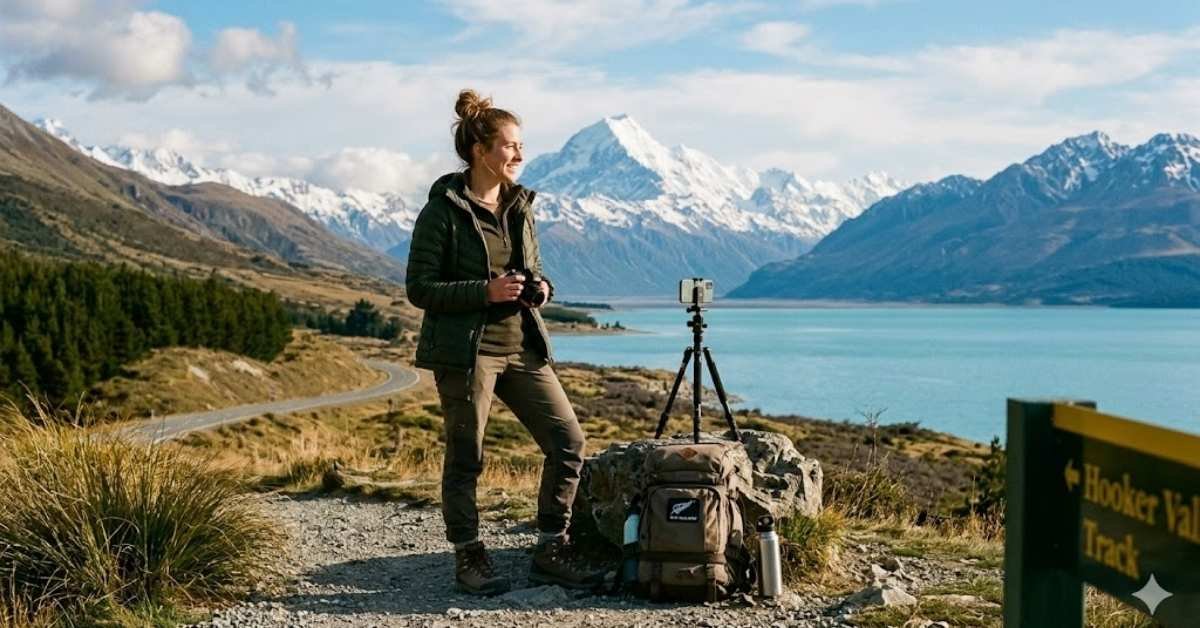
Traveling alone sounds exciting until doubts creep in. Safety, planning, and loneliness can feel overwhelming. That’s exactly why new zealand solo travel has become a top choice for independent explorers. It offers breathtaking landscapes, a welcoming culture, and a sense of freedom that’s hard to find elsewhere.
I’ve seen countless solo travelers choose New Zealand for their first independent trip, and the feedback is consistent: it’s easy, safe, and deeply rewarding. From well-connected transport to friendly locals, the country naturally supports solo adventures without making you feel isolated.
In this guide, you’ll discover how to plan your trip, stay safe, save money, and experience the best of New Zealand alone. Whether you’re a first-time solo traveler or seasoned explorer, this will help you travel smarter and with confidence.
Why New Zealand Is Perfect for Solo Travel
New Zealand solo travel feels like stepping into a world built for independence. The country blends dramatic mountains, calm lakes, and quiet towns in a way that never overwhelms you. Many travelers call it a natural playground for solo backpacking New Zealand, because everything feels easy to navigate and welcoming at the same time.
The first thing that stands out is how effortlessly life flows here. Public transport works well in major routes, locals are friendly, and even remote places feel accessible. For example, a solo traveler can move from busy Auckland streets to peaceful Lake Tekapo in a single journey without confusion or stress. That balance of simplicity and beauty creates a rare sense of confidence for people traveling alone.
What makes it even better is the emotional freedom. You decide everything without compromise. You can hike at sunrise, rest by a lake, or change your plan instantly. That flexibility turns independent travel New Zealand into something deeply personal and unforgettable.
Is New Zealand Safe for Solo Travelers
Safety often becomes the first question for anyone planning solo travel New Zealand, and thankfully the answer is reassuring. New Zealand ranks among the safest countries globally, with very low violent crime rates and a strong culture of respect.
Even in my observations from speaking with travelers, most people describe feeling comfortable walking alone in cities like Wellington or Queenstown at night. Basic precautions still matter, but the environment feels calm rather than threatening. Petty theft is rare, especially in rural areas where community trust is strong.
However, nature brings its own risks. Weather can change quickly, especially in mountain regions. So while the country is socially safe, physical preparation is important. Carry proper gear, check forecasts, and respect local advice. That balance of freedom and responsibility defines safe backpacking New Zealand experiences.
Best Time to Visit New Zealand Alone
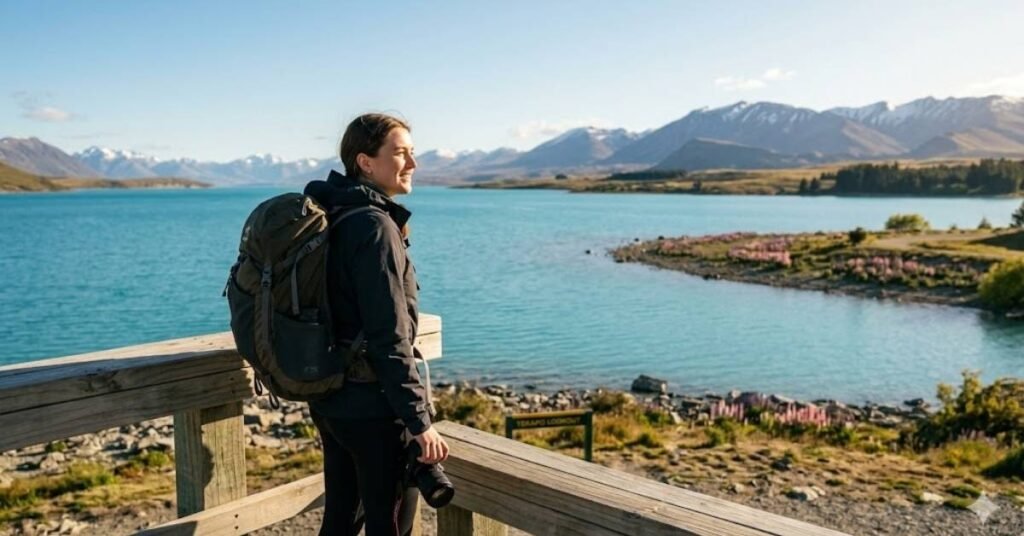
Timing shapes your entire journey when planning New Zealand solo travel. Summer months from December to February bring warm weather, long days, and busy tourist spots. It’s perfect for hiking and beach visits but comes with higher prices.
Autumn from March to May offers golden landscapes and fewer crowds. Many solo travelers prefer this season because it feels peaceful and budget-friendly. Winter from June to August transforms the South Island into a snowy wonderland, ideal for skiing but colder for general travel. Spring from September to November brings blooming flowers and fresh scenery.
Here’s a simple comparison:
| Season | Weather | Crowd Level | Best For |
| Summer | Warm | High | Beaches, hiking |
| Autumn | Mild | Medium | Scenic drives |
| Winter | Cold | Low | Skiing |
| Spring | Fresh | Low-Medium | Nature views |
Choosing the right season shapes your solo adventure New Zealand experience in a big way.
How to Get to New Zealand from the USA
Traveling from the USA to New Zealand requires a long-haul flight, often between 12 to 15 hours depending on layovers. Most flights land in Auckland, the main international gateway.
Airlines like Air New Zealand, Qantas, and United operate routes that connect through cities such as Los Angeles or San Francisco. Booking early usually helps reduce costs, especially during peak seasons.
Once you arrive, immigration is straightforward for American travelers with valid passports and approved entry conditions. The process feels smooth, and airport staff are generally helpful, making the first step of your international solo travel New Zealand journey stress-free.
Getting Around New Zealand as a Solo Traveler
Transportation plays a huge role in shaping your solo travel New Zealand experience. The country doesn’t have a vast train network, but buses like InterCity connect most major towns.
Many solo travelers also choose rental cars or campervans. This option gives full control over routes and stops, especially for scenic drives. Hitchhiking exists but is less common for safety-conscious travelers.
For example, driving from Queenstown to Wanaka feels like moving through a painting, with mountains on both sides and lakes reflecting the sky. That kind of freedom defines road trip New Zealand solo travel.
North Island vs South Island for Solo Travel
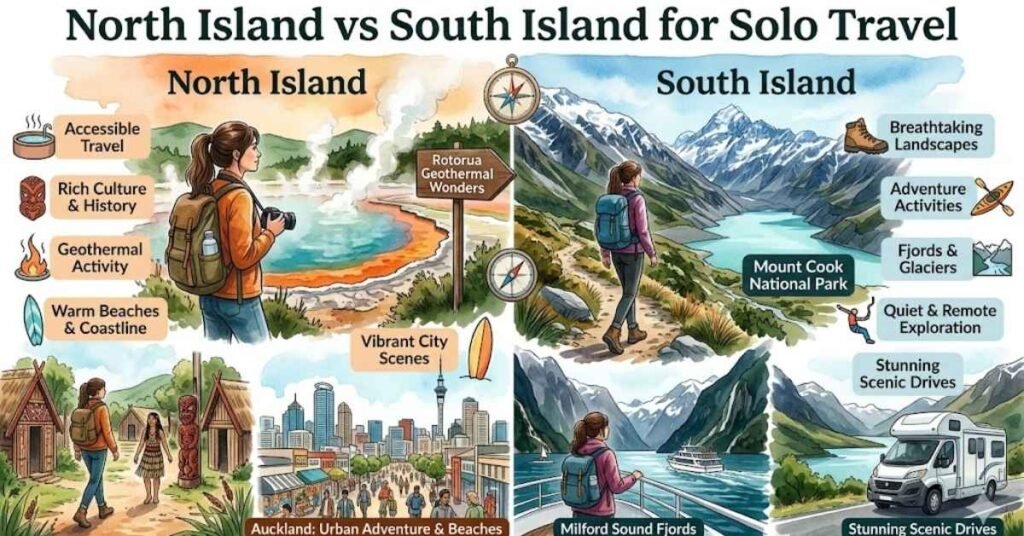
Choosing between islands depends on your travel style. The North Island feels warmer, more cultural, and more urban. The South Island feels wild, dramatic, and nature-heavy.
The North Island offers geothermal wonders, Maori heritage, and vibrant cities. The South Island focuses more on glaciers, fjords, and mountain adventures. Many travelers combine both for a complete New Zealand solo travel itinerary.
If you prefer culture and relaxed travel, the North Island fits better. If adventure and landscapes excite you more, the South Island steals the show.
Best Destinations on the North Island for Solo Travelers
The North Island offers a rich mix of culture and nature. Auckland gives you a modern city base with harbors and skyline views. Rotorua introduces geothermal activity and strong Maori culture experiences New Zealand, where traditions feel alive and deeply respected.
Wellington adds artistic energy with museums, coffee culture, and coastal walks. Hobbiton attracts fans of cinematic landscapes, while Coromandel offers peaceful beaches and hidden coves perfect for reflection.
Solo travelers often enjoy the balance here. One day feels urban, the next feels spiritual and natural.
Best Destinations on the South Island for Solo Travelers
The South Island defines adventure travel New Zealand solo style. Queenstown stands as the adventure capital, offering skydiving, bungee jumping, and lake cruises.
Wanaka feels quieter but equally stunning, with mountain reflections and peaceful hiking trails. Milford Sound brings dramatic fjords that feel almost unreal. Aoraki/Mount Cook National Park offers glacier views and challenging hikes.
Travelers often say the South Island feels like “walking inside a postcard,” especially when exploring independently.
May you like also: Benefits Of Solo Travel: Transform Your Life Today
Top Things to Do Alone in New Zealand
Solo travel here never feels boring. You can explore national parks, relax in hot pools, or drive scenic routes at your own pace. Many travelers enjoy café hopping in small towns or joining local tours for short social interaction.
Even simple activities like watching sunsets at Lake Tekapo or walking along empty beaches become memorable. That freedom defines solo exploration New Zealand lifestyle.
Hiking and Great Walks for Solo Adventurers
New Zealand’s hiking culture is world-famous. Trails like the Tongariro Alpine Crossing and Milford Track offer unforgettable views.
These Great Walks New Zealand are well-maintained and safe for prepared hikers. Huts along the trails provide shelter and community interaction, which helps solo travelers feel connected without losing independence.
The key is preparation. Weather changes fast, so proper gear and planning matter more than experience level.
Adventure Activities Worth Doing on Your Own
New Zealand built its global reputation on adventure. Solo travelers often try bungee jumping in Queenstown, skydiving over Lake Taupo, or jet boating through narrow canyons.
These activities are professionally run with strong safety systems. Even alone, you never feel unsupported. The adrenaline rush often becomes a highlight of solo adventure New Zealand travel.
Exploring Maori Culture as a Solo Visitor
Engaging with Maori culture New Zealand travel adds emotional depth to your journey. Cultural villages in Rotorua and local performances offer storytelling, dance, and traditional food experiences.
Visitors often describe these moments as grounding. You don’t just see New Zealand; you understand its roots and respect its heritage.
Solo Female Travel in New Zealand
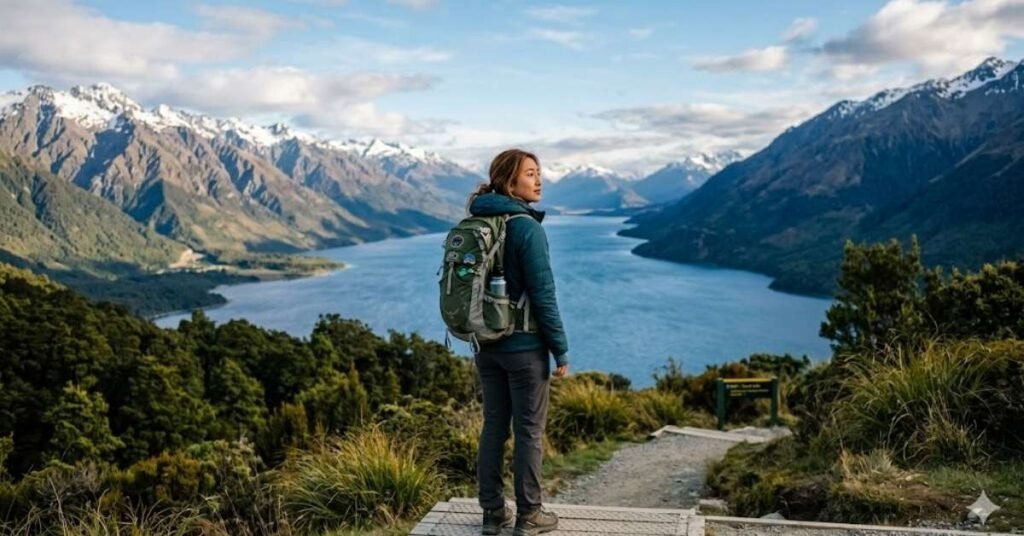
New Zealand is widely recommended for solo female travel New Zealand because of its safety and respectful culture. Many women travel alone without major concerns.
Simple precautions like staying aware at night and choosing reputable transport make the experience smooth. The country’s calm environment supports confidence and independence.
How to Meet Other Travelers on the Road
Meeting people happens naturally in hostels, tours, and hiking trails. Shared kitchens and group activities encourage conversation.
Many solo travelers end up forming temporary friendships that last for days or even weeks. This social ease makes backpacking New Zealand solo travel feel less isolating.
Best Accommodation Types for Solo Travelers
Options range from hostels to budget lodges and campervans. Hostels remain the most social choice, while campervans offer privacy and freedom.
Budget travelers often mix both to balance cost and experience.
How Much Does Solo Travel in New Zealand Cost
Costs depend on travel style, but New Zealand is generally mid-to-high range. Budget travelers spend less by choosing hostels and cooking meals.
| Category | Daily Cost (USD) |
| Budget | 60–90 |
| Mid-range | 100–180 |
| Luxury | 200+ |
Careful planning helps manage New Zealand travel budget solo efficiently.
Sample Solo Travel Itinerary for Two Weeks
A two-week New Zealand solo travel itinerary works best when you balance both islands instead of rushing. Most travelers start in Auckland, then move down to Rotorua for geothermal parks and Maori cultural experiences. From there, Wellington offers a smooth mix of city life and coastal walks before you fly or ferry to the South Island.
Once in the South Island, Queenstown becomes your adventure base. You can spend a few days exploring nearby spots like Arrowtown and Lake Wakatipu. After that, Wanaka and Mount Cook National Park add dramatic alpine scenery that feels unreal in real life.
This route gives you a complete taste of solo travel New Zealand without burnout. You get culture, adventure, and calm moments all in one journey.
Sample Solo Travel Itinerary for One Month
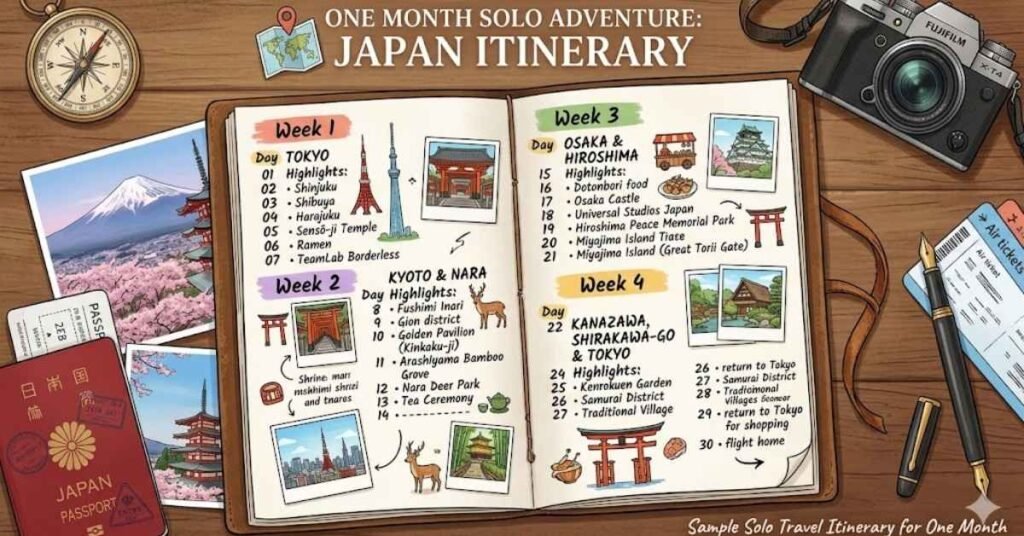
A one-month New Zealand solo travel itinerary allows slow travel, which many people actually enjoy more. Instead of rushing, you can spend extra days in places like Rotorua, Wellington, and Queenstown, getting deeper local experiences.
In the South Island, you can extend your stay in Wanaka and include Fiordland National Park for Milford Sound cruises. This slower pace helps you connect with landscapes instead of just passing through them.
By the end of a month, you don’t just “visit” New Zealand. You start to feel like you’ve lived parts of it, which is the real magic of long-term solo backpacking New Zealand.
Traveling New Zealand by Campervan Alone
Traveling in a campervan is one of the most iconic ways to experience New Zealand solo travel. It gives you full freedom to sleep near lakes, wake up by mountains, and change your route anytime you want.
Many solo travelers prefer this because it cuts hotel costs and adds flexibility. Campsites are easy to find, and facilities are usually clean and well-managed across the country.
However, solo campervan travel also needs responsibility. You must plan fuel stops, respect camping rules, and stay aware of weather conditions. When done right, it turns into one of the most unforgettable road trip New Zealand solo travel experiences.
Solo Road Trip Tips for New Zealand
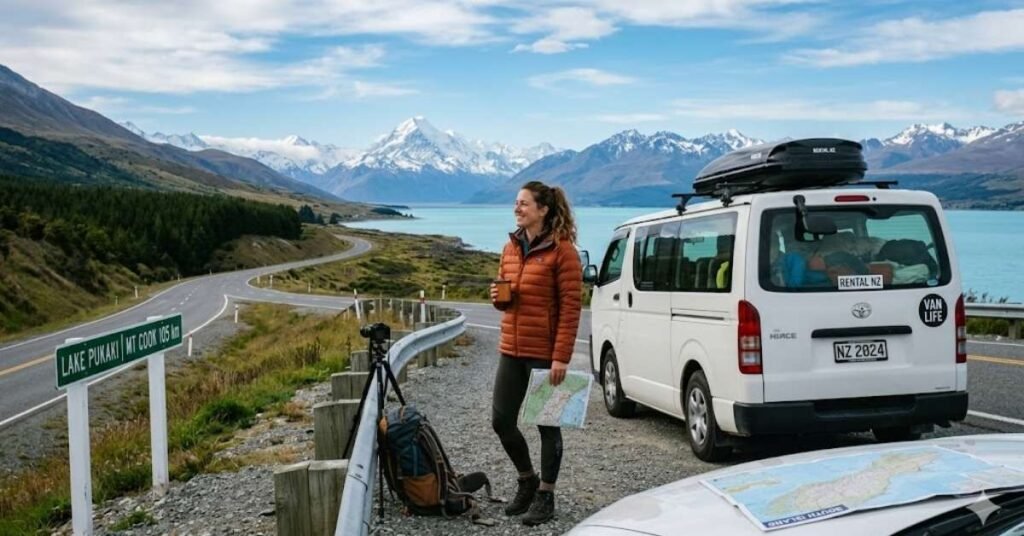
A solo road trip in New Zealand feels like driving through a movie scene, but preparation matters. Roads can be narrow, winding, and sometimes affected by sudden weather changes, especially in mountain areas.
Always keep a flexible schedule. You might stop more often than planned because every turn offers a new view. That’s part of the charm of independent travel New Zealand road trips.
Also, avoid rushing long distances in one day. Short drives feel more enjoyable and safer. In New Zealand, the journey often matters more than the destination itself.
Group Tours vs Independent Travel in New Zealand
Group tours in New Zealand give structure, transport, and a ready-made social circle. They work well if you prefer not to handle planning or driving on your own.
On the other hand, independent New Zealand solo travel gives you full control. You choose where to go, how long to stay, and what to skip. That freedom is what most solo travelers value the most.
Many people actually mix both styles. They join a group tour for Milford Sound or Tongariro Crossing, then travel independently for the rest of the journey.
See also: Safest Countries for Solo Female Travelers (2026 Ultimate Guide)
Staying Connected and Navigating Without a Guide
Staying connected during solo travel New Zealand is easy in cities but slightly limited in remote areas. Mobile networks work well in most towns, but coverage can drop in national parks.
Offline maps are extremely useful here. Apps like Google Maps offline mode help you navigate even without internet. Local visitor centers also provide free maps and updates about road conditions.
Interestingly, traveling without a guide often improves the experience. You move at your own pace, discover hidden stops, and feel more connected to your surroundings.
Packing List for a Solo New Zealand Trip
Packing for New Zealand solo travel is all about layers. Weather changes fast, so you need clothing that adapts easily. A waterproof jacket, warm fleece, and breathable shirts form the core essentials.
Good walking shoes are non-negotiable because most activities involve exploring outdoors. A small daypack also helps for hikes and short trips.
Beyond clothing, carry sunscreen, a power bank, and basic medicines. New Zealand is well-equipped, but having personal essentials makes solo travel smoother and stress-free.
Travel Insurance for Solo Travelers in New Zealand
Travel insurance is not optional for solo travel New Zealand, especially if you plan adventure activities. Skydiving, hiking, and water sports are common, and accidents, while rare, can happen.
A good insurance plan covers medical emergencies, trip delays, and cancellations. It gives peace of mind, especially when traveling alone without backup support.
Many solo travelers only realize its importance after an unexpected situation. Having it from the start makes your journey safer and more confident.
Visa Requirements for Americans Visiting New Zealand
For New Zealand solo travel from the USA, entry is simple but requires approval before arrival. Travelers need an electronic travel authorization known as NZeTA.
The process is done online and usually gets approved quickly. You also pay a small tourism fee along with it.
Once approved, you can enter New Zealand for tourism stays without complicated paperwork. It makes planning a solo trip much smoother and stress-free, especially for first-time international travelers.
Frequently Asked Questions
Is New Zealand a good place to solo travel?
Yes, New Zealand solo travel is considered one of the safest and most rewarding experiences for independent travelers. With low crime rates, friendly locals, and easy transport routes, it offers a smooth solo backpacking New Zealand experience backed by strong traveler trust.
How much does a solo trip to New Zealand cost?
A solo travel New Zealand budget usually ranges from $60 to $180 per day depending on your style. Budget stays, self-cooking, and public transport help keep costs low while still enjoying full New Zealand solo travel experiences.
Can I travel to New Zealand alone?
Absolutely, you can easily enjoy solo travel New Zealand without a guide. The country is well-connected, safe, and structured for independent exploration, making it ideal for first-time solo travelers seeking confidence and freedom.
Is 30 too old to solo travel?
Not at all—30 is actually a great age for New Zealand solo travel because you travel with more confidence, planning skills, and financial stability. Solo travel has no age limit, only curiosity and willingness matter.
What is the cheapest month to go to NZ?
The cheapest months for New Zealand solo travel are usually May, June, and September. These off-peak seasons offer lower prices, fewer crowds, and a more relaxed solo backpacking New Zealand experience.
Which country is best for a solo trip?
New Zealand ranks among the best countries for solo travel New Zealand experiences, alongside Japan and Iceland. Its safety, natural beauty, and easy navigation make it especially ideal for independent travelers seeking adventure and peace.
Conclusion
In the end, New Zealand solo travel stands out as one of the most balanced and rewarding ways to explore the world. From safe cities and scenic road trips to unforgettable hikes and rich Maori culture, the country offers everything a solo traveler needs. Whether it’s planning itineraries, choosing transport, or managing costs, every part of the journey feels accessible and well-connected for independent exploration.
Looking back at this topic, it really highlights how much solo travel changes your perspective. Breaking down each part of the journey made it clear that confidence grows with simple planning and real experience. Personally, exploring these insights felt like a reminder that traveling alone isn’t about being alone it’s about discovering freedom, patience, and a deeper connection with places you once only imagined.

Rajesh Khanna writes solo travel guides that actually help you go. No fluff, no generic tips just real advice from someone who has walked those streets alone. With 5+ years of solo travel experience across multiple continents, he covers everything from safety and budgeting to hidden gems most tourists never find. On Solivoy Route, his one goal is simple: make you confident enough to book that trip alone.