
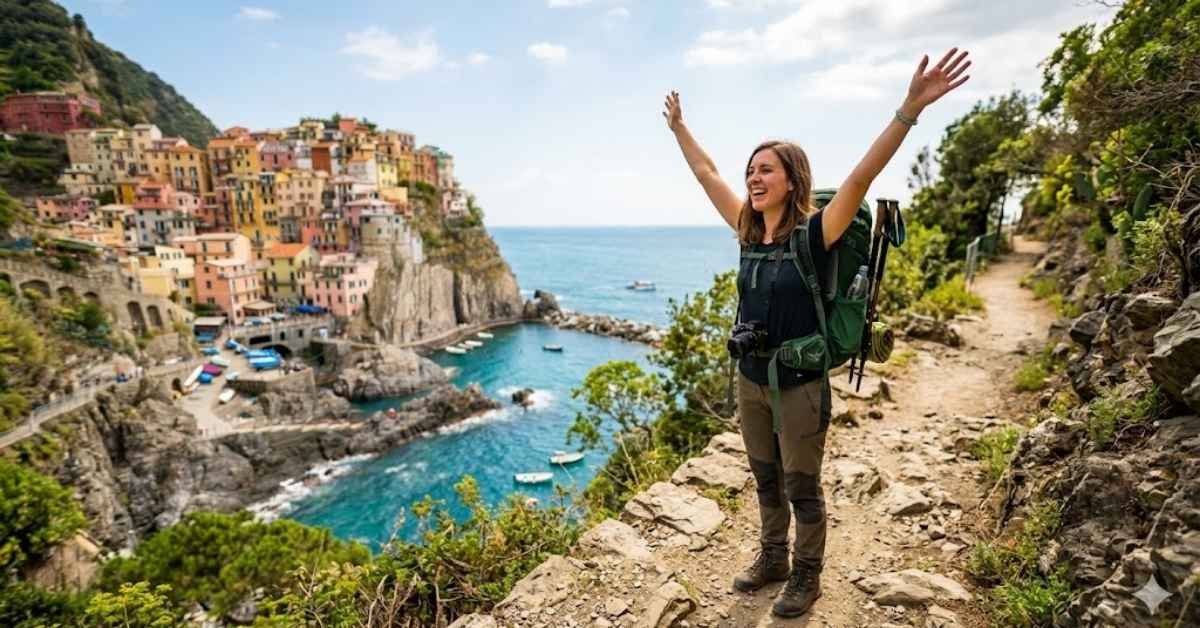
Most people wait for the “perfect travel partner” and end up waiting forever. Sound familiar? The truth is, solo travel might be the most liberating decision you ever make. The benefits of solo travel go far beyond just seeing new places. They reshape how you think, how you handle challenges, and how you see yourself.
I’ve traveled alone across three continents, and nothing builds real confidence faster than navigating an unfamiliar city with no one to rely on but yourself. Solo travel teaches you skills no classroom ever could: adaptability, patience, and genuine self-awareness.
In this article, you’ll discover the most powerful benefits of traveling solo, from mental health gains to financial freedom, personal growth, and why millions of people are choosing to explore the world alone, and loving every minute of it.
Is Solo Travel Worth It?
The short answer is yes absolutely yes. But let me give you the longer, more honest answer. Solo travel is not just a trend. It is one of the most transformative experiences a human being can have. When you strip away the comfort of familiar faces and travel alone into the unknown, something powerful happens inside you.
Many people hesitate because they fear loneliness, safety risks, or simply feel awkward eating alone at a restaurant. These fears are valid. But here is what most people do not realize every solo traveler felt exactly the same fear before their first trip. The difference is they went anyway.
Solo travel is worth it because it gives you something group travel rarely can a completely unfiltered experience of the world and of yourself. You make every decision. You face every challenge. You collect every memory. And in the end, you return home as a fundamentally different, stronger, and more self-aware person.
Complete Freedom While Traveling
Freedom is the single greatest gift solo travel gives you. When you travel alone, nobody else’s preferences, schedules, or moods dictate your day. You want to spend four hours inside a museum? Go ahead. You want to skip the tourist hotspot and sit by a quiet river? That is entirely your call.
This kind of complete travel freedom is rare in everyday life. Most of us operate inside structures: work schedules, family obligations, social expectations. Solo travel breaks all of that. Even if just for a week, you live entirely on your own terms. That feeling is not just enjoyable, it is deeply healing.
Flexibility in Your Travel Plans
One of the most underrated benefits of solo travel is total flexibility. When you travel with others, every decision becomes a negotiation. Where to eat, how long to stay, which route to take it all requires compromise. Solo travel eliminates that friction entirely.
You can change your itinerary at the last minute with zero guilt. Meet a fellow traveler who recommends a hidden beach? You can go. Feeling tired and want to spend a day in your hostel reading? Nobody is stopping you. This flexible travel planning allows you to follow your instincts, and often, the best travel moments come from exactly those spontaneous decisions.
| Travel Style | Group Travel | Solo Travel |
| Decision Making | Shared/Compromised | Fully Independent |
| Itinerary Changes | Requires Agreement | Instant & Flexible |
| Pace of Travel | Group’s Average Pace | Your Own Pace |
| Meal Choices | Majority Rules | Personal Preference |
| Budget Control | Shared Decisions | Full Personal Control |
Opportunities for Personal Growth
Ask any seasoned solo traveler what the experience gave them, and they will rarely say “great photos.” They will say it changed them. Personal growth through travel is real, measurable, and long-lasting.
When you are alone in a foreign country, you are forced to develop skills you never knew you needed. You learn to read maps, communicate across language barriers, manage budgets, and make quick decisions under pressure. Every small challenge you overcome quietly builds a stronger version of yourself.
Psychologists and travel researchers consistently highlight that independent travel pushes individuals into a state of productive discomfort the kind that accelerates emotional maturity and self-confidence faster than most conventional life experiences.
Step Beyond Your Comfort Zone
Growth lives outside your comfort zone. This is not just a motivational quote it is a psychological fact. Solo travel is perhaps the most effective way to consistently push past your personal boundaries in a safe and meaningful way.
Booking a flight to an unfamiliar country alone already requires courage. But once you are there, the challenges keep coming: navigating foreign transit systems, trying local food you cannot identify, starting conversations with complete strangers. Each of these moments, however small, is a step beyond what felt possible before.
“Travel is the only thing you buy that makes you richer.” Anonymous
That richness is not financial. It is the expansion of your personal boundaries, your worldview, and your tolerance for uncertainty. And once you stretch that comfort zone, it never fully shrinks back.
Making New Connections and Friends

Here is something counterintuitive solo travelers often make more friends than group travelers. When you travel with a group, you stay within your social bubble. When you travel alone, you are naturally more open, approachable, and motivated to connect with people around you.
Hostels, local cafes, day tours, and even trains become social spaces when you are on your own. You strike up conversations more easily. You accept invitations you might otherwise decline. You share meals with strangers who become lifelong friends.
Authentic human connections made during solo travel often feel deeper than everyday friendships back home, simply because they are formed in honest, vulnerable, and adventurous circumstances. There is a unique bond that forms between two people who are both navigating the world alone and choose, even briefly, to navigate it together.
Indulge in Solitude
Modern life is loud. Notifications, meetings, social obligations, and constant digital noise fill every corner of daily existence. Solo travel gives you something incredibly rare meaningful solitude.
This is not loneliness. Loneliness is wanting connection and not having it. Solitude is choosing to be with yourself and finding it peaceful, even nourishing. Many solo travelers describe moments of sitting alone at a sunrise viewpoint, or eating a quiet dinner watching the world pass by, as some of the most content moments of their entire lives.
Learning to enjoy your own company is a profound life skill. Solo travel teaches it better than anything else.
Finding Yourself Through Travel
This phrase gets used so often it starts to feel cliché. But strip away the romanticism, and there is genuine truth underneath. Finding yourself through travel simply means gaining clarity about who you are, what you value, and what you want from life.
When you remove yourself from your usual environment, your job, your social circle, your daily routine you see yourself more clearly. Without the noise of ordinary life defining you, you get to rediscover your own preferences, passions, and personality.
Many solo travelers return home with a clearer sense of purpose, stronger boundaries, and a deeper understanding of what truly makes them happy. That kind of self-knowledge is difficult to put a price on.
Learn Your True Capabilities
You are more capable than you think. Solo travel proves it. Before their first solo trip, most people underestimate themselves dramatically. They worry they cannot handle problems alone, navigate foreign systems, or manage unexpected situations.
Then they do all of those things and more. Discovering your true capabilities through real-world experience is one of the most empowering outcomes of solo travel. Every problem you solve alone, every language barrier you push through, every moment you keep going when the comfortable option is to quit all of it reveals a version of yourself that was always there, just untested.
Self-Growth and Development
Self-growth is not something that happens in your comfort zone. It happens when circumstances challenge you and you rise to meet them. Solo travel creates those circumstances constantly and consistently.
From managing travel logistics to handling cultural misunderstandings, every experience becomes a lesson. Over time, these lessons accumulate into genuine personal development greater emotional intelligence, stronger self-discipline, deeper empathy, and a far more flexible mindset.
Research from the Journal of Personality and Social Psychology found that people who live abroad or engage in deep cross-cultural experiences develop measurably higher levels of psychological flexibility and creative thinking. Solo travel delivers both.
Building Resilience Through Challenges
Things go wrong when you travel. Flights get cancelled. Bookings fall through. You get lost. You get sick. And when you are alone, you cannot pass those problems to someone else. You deal with them.
This is exactly where resilience is built. Not in smooth, comfortable experiences but in difficult ones where you had no choice but to figure it out. Every solo traveler has a story about something going badly wrong and somehow making it through. Those stories are not just funny dinner party anecdotes. They are proof of genuine resilience developed through real experience.
That resilience transfers directly back into everyday life into your career, your relationships, and your ability to handle stress with composure.
Problem-Solving and Decision-Making Skills

Solo travel is essentially a continuous exercise in real-world problem solving. Every day presents new decisions logistical, financial, social, and sometimes safety-related. Without a travel companion to consult, you develop the habit of thinking clearly, assessing options quickly, and committing to decisions confidently.
Over time, this sharpens your decision-making skills in ways that office training programs simply cannot replicate. The stakes feel real because they are real. And when decisions have genuine consequences, the brain pays closer attention and learns faster.
Improved Communication Skills
When you travel solo through countries where you do not speak the language, communication becomes creative. You learn to use gestures, expressions, translation apps, and sheer persistence to get your point across. You become a better listener because you have to pay close attention to context and tone.
Back home, these improved communication skills show up in meaningful ways in job interviews, in difficult conversations, in your ability to connect with people from different backgrounds. Solo travel quietly trains you to become a more effective communicator without you even realizing it is happening.
Responsibility and Independence
When there is no one else to rely on, you become genuinely self-reliant. You manage your own budget, your own safety, your own schedule, and your own emotional state. That level of personal responsibility builds a kind of quiet independence that stays with you long after the trip ends.
People who travel solo frequently report feeling more capable and self-sufficient in their daily lives afterward. Small stressors that once felt overwhelming begin to feel manageable. Because you already handled bigger challenges alone in an unfamiliar country, with limited resources and you came through just fine.
May you like also: Safest Countries for Solo Female Travelers (2026 Ultimate Guide)
Confidence Boost Through Solo Travel
Confidence is not something you build by thinking about it. You build it through action through doing difficult things and discovering you can handle them. Solo travel is one of the fastest confidence-builders available to anyone willing to try it.
The first time you successfully navigate a foreign city alone, order food in a language you barely speak, or talk your way through a missed connection you feel it. That quiet, solid confidence that comes from real experience. Not borrowed from someone else’s encouragement, but earned by your own actions. That kind of confidence is unshakeable.
Mindfulness and Mental Clarity
When you travel alone, you naturally become more present. There is no one to chat with constantly, no group dynamic to manage. You notice things the smell of street food, the rhythm of a foreign city, the texture of an ancient wall. This heightened presence is essentially natural mindfulness.
Many solo travelers describe their trips as mentally clarifying in ways that meditation retreats or therapy sometimes cannot match. The combination of new environments, physical movement, and mental stimulation creates ideal conditions for the brain to reset, reorganize, and recover from the chronic stress of modern life.
Global Awareness and Cultural Exposure
Traveling solo forces genuine cultural immersion. Without a group buffer, you engage directly with local people, local food, local customs, and local realities. You see the world as it actually is complex, diverse, and far more nuanced than any news channel presents it.
This global awareness builds empathy, reduces unconscious bias, and gives you a more accurate, compassionate understanding of humanity. In a world increasingly divided by misunderstanding, the simple act of traveling alone and engaging honestly with different cultures is quietly radical.
Career Development Benefits
Solo travel builds skills that employers genuinely value. Adaptability, communication, cultural intelligence, problem-solving, and leadership under pressure these are not just travel skills. They are premium career skills.
Many professionals who travel solo report that their travel experiences directly strengthened their performance at work. The ability to stay calm in unfamiliar situations, communicate across cultural differences, and make confident decisions independently all of this translates powerfully into professional environments.
Career development through travel is real, and increasingly, forward-thinking employers recognize it.
Language Skills Improvement
There is no faster way to learn a language than being surrounded by it with genuine need to communicate. Solo travelers, without a companion to lean on, naturally absorb more of the local language out of necessity.
Even partial language learning creates significant cognitive benefits: improved memory, stronger multitasking ability, and greater mental flexibility. And practically speaking, even learning fifty words of a local language opens doors, builds goodwill with locals, and deepens the entire travel experience.
Guilt-Free Rest and Recharge
One underappreciated benefit of solo travel is the freedom to rest completely, without guilt. When you travel with others, taking a slow day can feel like letting the group down. Solo travel removes that pressure entirely.
If you need to spend a morning in bed, sit quietly in a park, or simply do nothing you can. This kind of guilt-free rest is deeply restorative, especially for people who carry heavy responsibilities at home. Solo travel gives you full permission to recharge on your own timeline.
Authentic Connections While Traveling
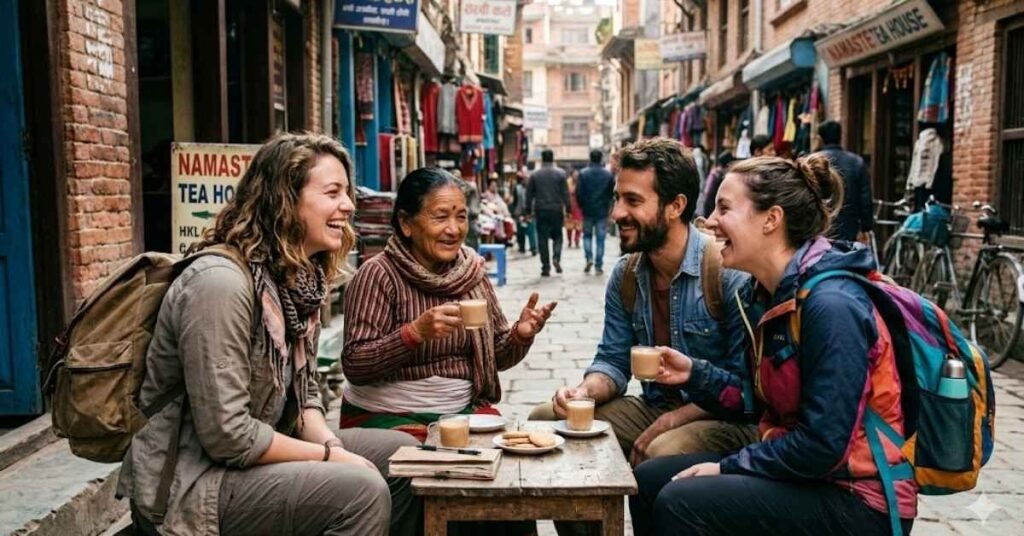
Paradoxically, traveling alone often leads to the most authentic human connections. Without the social armor of a group, you show up more openly and honestly. Conversations with strangers go deeper. Shared experiences feel more genuine.
These connections, a conversation with a local shopkeeper, a shared meal with a fellow traveler, a spontaneous friendship formed on a hiking trail often carry more meaning than years of routine social interaction back home. Authentic travel connections remind you of our shared humanity in the most direct and beautiful way.
Solo Travel Safety Tips for Beginners
Safety is the most common concern for first-time solo travelers, and it deserves honest attention. Here are essential safety practices every beginner should know.
Research your destination thoroughly before you go. Understand local customs, safe neighborhoods, and common scams. Always share your itinerary with someone you trust at home. Keep digital and physical copies of all important documents passport, insurance, bookings.
Use reputable accommodation, especially for your first solo trip. Stay in well-reviewed hostels or hotels in central, well-lit areas. Trust your instincts if a situation feels wrong, remove yourself from it immediately without worrying about being polite.
| Safety Tip | Why It Matters |
| Share your itinerary | Someone knows where you are |
| Keep document copies | Protection if originals are lost |
| Research local scams | Avoid common tourist traps |
| Stay in reviewed accommodation | Reduces safety risks significantly |
| Trust your instincts | Your gut is often right |
| Keep emergency contacts saved | Fast access in crisis situations |
Solo Travel for Introverts

If you are an introvert, solo travel might genuinely be your ideal travel style. Introverts recharge through solitude, and solo travel provides exactly that space, quiet, and the freedom to engage socially only when you genuinely want to.
Solo travel for introverts removes the exhausting social obligation of constant group interaction. You control every social encounter. You can have deep one-on-one conversations with interesting strangers, then retreat to your own space whenever you need to recharge. Many introverts describe solo travel as the first time travel felt truly comfortable and energizing rather than draining.
See also: Solo Travel New York Guide: Tips, Safety & Itinerary
Mental Health Benefits of Solo Travel
The mental health benefits of solo travel are significant and increasingly supported by research. Travel breaks the cycle of chronic stress by introducing novelty, movement, and perspective into a life that may have become monotonous or overwhelming.
Solo travel specifically adds the mental health benefit of self-efficacy the deep psychological confidence that comes from handling challenges independently. It reduces anxiety about the unknown, because you have faced the unknown and survived it, even thrived in it.
Studies consistently show that travel experiences reduce cortisol levels (the stress hormone), improve mood, enhance creativity, and reduce symptoms of burnout and depression. For many people, a solo trip is not just a vacation it is a genuine act of mental self-care that produces lasting positive change.
When you travel alone, you also gain perspective. Problems that felt enormous at home begin to look smaller against the backdrop of a wider world. That perspective shift alone is worth the price of any plane ticket.
Frequently Asked Questions
What are the main advantages of traveling alone?
Traveling alone gives you complete freedom, flexibility, and unmatched opportunities for personal growth. You make every decision independently, which builds self-confidence, resilience, and a deeper understanding of yourself.
What are the 7 key benefits of traveling?
The seven core benefits of traveling include personal development, improved mental health, cultural awareness, stronger communication skills, increased confidence, better problem-solving abilities, and authentic human connections that enrich your life long after the trip ends.
Why is Gen Z obsessed with solo travel?
Gen Z values authentic experiences, mental wellness, and personal freedom over material possessions. Solo travel aligns perfectly with their desire for self-discovery, cultural immersion, and independence plus social media makes sharing those experiences easier than ever.
What are the 5 most important benefits of traveling?
The five most impactful benefits of traveling are boosted self-confidence, improved mental clarity, expanded cultural awareness, stronger adaptability skills, and meaningful human connections all of which positively shape both your personal and professional life.
Which age is best for solo travel?
There is no single perfect age for solo travel people travel alone successfully at 18 and at 70. However, your mid-20s to early 30s is often ideal, as you typically have enough life experience, financial independence, and physical energy to fully embrace the journey.
Is it smart to travel alone?
Yes solo travel is one of the smartest investments you can make in yourself. It builds real-world problem-solving skills, emotional resilience, and self-reliance that directly improve your everyday life, career performance, and mental well-being.
Does solo travel help with anxiety and mental health?
Absolutely. Solo travel reduces chronic stress, lowers cortisol levels, and builds self-efficacy the confidence that comes from handling challenges alone. Many mental health professionals recognize independent travel as a powerful tool for managing anxiety and recovering from burnout.
Is solo travel safe for first-time travelers?
Solo travel is safe when approached with proper preparation. Researching your destination, sharing your itinerary, staying in reputable accommodations, and trusting your instincts significantly reduce risks and make your first solo trip a positive, empowering experience.
Can introverts enjoy solo travel?
Solo travel is arguably the best travel style for introverts. It removes forced social interaction, giving introverts full control over when and how they engage with others making travel feel energizing rather than exhausting.
How does solo travel improve communication skills?
Navigating language barriers, engaging with locals, and connecting with fellow travelers naturally sharpens your ability to listen, express yourself clearly, and communicate across cultural differences skills that carry enormous value in both personal and professional settings.
Can solo travel boost your career?
Yes. Skills developed through independent travel including adaptability, cross-cultural communication, decision-making under pressure, and leadership are highly valued by employers and directly strengthen your professional performance and career growth.
What is the biggest challenge of traveling alone?
The biggest challenge most solo travelers face is overcoming loneliness in the early stages. However, with an open mindset and a willingness to connect with other travelers and locals, loneliness quickly transforms into empowering solitude and rich new friendships.
Conclusion
The benefits of solo travel go far deeper than just seeing new places. From building unshakeable confidence and improving mental health to developing real-world skills that strengthen your career and relationships, traveling alone genuinely transforms you from the inside out. Whether you are an introvert seeking quiet freedom or an adventurer chasing growth, solo travel meets you exactly where you are.
Personally, the first time I traveled alone, I came home feeling like a completely different person, calmer, braver, and more self-aware than I had ever felt before. That one trip taught me more about myself than years of routine ever did. If you have been waiting for a sign to book that solo trip this is it. Go.

Rajesh Khanna writes solo travel guides that actually help you go. No fluff, no generic tips just real advice from someone who has walked those streets alone. With 5+ years of solo travel experience across multiple continents, he covers everything from safety and budgeting to hidden gems most tourists never find. On Solivoy Route, his one goal is simple: make you confident enough to book that trip alone.